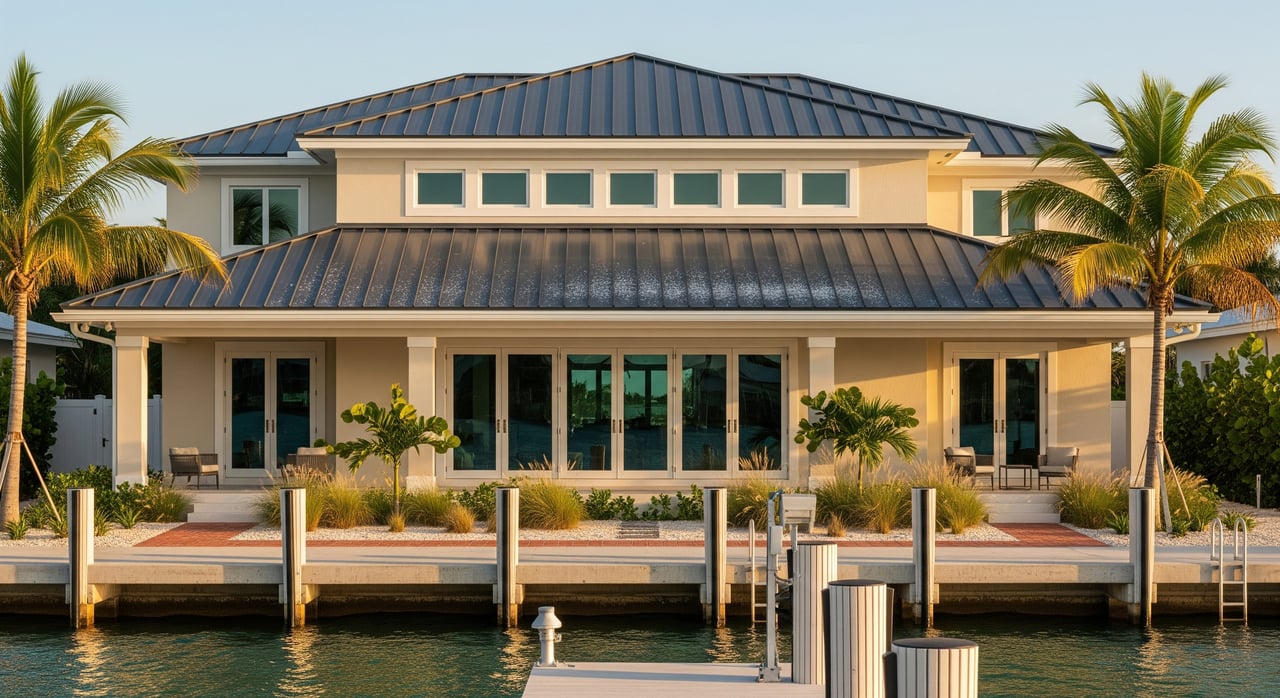
You hear “hurricane‑ready” often in the Florida Keys, but what does that really mean when you are buying or selling in Tavernier? In a coastal market with powerful winds, wind‑driven rain, and salt air, two features consistently stand out: impact windows and a well‑engineered metal roof. They protect your home, simplify storm prep, and can help with maintenance and insurance considerations. In this guide, you’ll learn how to evaluate these upgrades, what to verify before you make decisions, and how to position your home or offer with confidence. Let’s dive in.
Why these features matter in Tavernier
Tavernier sits in a coastal environment with elevated wind and water exposure compared with inland Florida. Hurricanes, tropical storms, and salt‑air corrosion are part of life in the Keys. Flooding and elevation also influence value, insurance, and long‑term upkeep, so it pays to review flood maps and mitigation steps for any specific parcel.
Local work follows the Florida Building Code with Monroe County permitting and inspections. Many coastal properties must meet stringent wind‑zone standards and product approvals. When you see “Miami‑Dade approved” or “Florida Product Approval,” that signals a product has passed tough impact and pressure testing commonly referenced by building officials and insurers.
Impact windows and doors: what to know
Core benefits you’ll feel
Impact‑rated windows and doors are designed to resist windborne debris and pressure cycles during storms. When properly installed, they reduce the risk of glass breakage and interior water intrusion. You also gain everyday benefits like improved security, sound reduction, and UV filtering. For many owners, they remove the need for temporary shutters.
Approvals and labels to verify
When you tour a home or review a listing, look for proof that the glass is truly impact‑rated. Useful markers include Miami‑Dade Notice of Acceptance (NOA), Florida Product Approval, and test standards such as ASTM E1886 and E1996. You should find labels or etched markings on frames or glass, plus paperwork from the installer or manufacturer. Approvals and labels give you confidence that the system was tested for large‑missile impacts and cyclic pressures.
Installation and maintenance checks
A certified product still depends on proper installation. Anchoring to the structure and correct flashing and sealants are critical to resist wind‑driven rain. During showings or inspections, check for gaps, deteriorated sealant, or water staining around frames. For coastal durability, confirm corrosion‑resistant hardware and finishes, and keep weep holes clear so water can drain.
Quick checklist for buyers and sellers
- Confirm visible labels or etched markings on frames or glass.
- Request permits and final inspection records for installation.
- Ask for NOA or Florida Product Approval documentation and warranties.
- Look for clean, intact sealants and no stains around openings.
- Verify any glass replacements match the original rated product.
Metal roofs in the Keys
Why buyers value metal roofs
Metal roofing, when properly engineered, offers strong wind resistance and can last longer than many alternatives in coastal settings. It performs well against wind‑driven rain and is fire‑resistant. Reflective coatings may help reduce cooling loads, an added benefit in the summer heat.
Best types for Tavernier conditions
Standing‑seam (concealed fastener) roofs are widely preferred for wind resistance because the fasteners are protected under the seams. Exposed‑fastener systems can be used when carefully engineered but require vigilant fastener maintenance in salt air. For materials, aluminum is naturally corrosion‑resistant in marine environments, while steel needs protective coatings and compatible fasteners to hold up near the ocean. Durable finishes like PVDF (often called Kynar‑type) and substrates such as Galvalume improve resistance to corrosion and fading.
Installation and durability checks
Wind performance depends on correct attachment to the roof deck and structure. Look for details that keep water out in heavy rain, including properly integrated underlayment, ridge, eave, and penetration flashings. Verify ventilation to limit condensation and heat buildup. Also confirm the roof profile matches the home’s slope requirements.
Maintenance and lifespan
A quality metal roof can deliver a long service life with routine care. In the Keys, corrosion control is essential. Check for compatible metals, stainless or corrosion‑resistant fasteners and washers, and no contact between dissimilar metals that could accelerate rust. Review manufacturer and finish warranties and whether they are transferable and cover coastal corrosion.
How to read Tavernier listings fast
Keywords that matter in remarks
When scanning listings, terms can offer quick clues:
- Impact: “impact glass,” “hurricane impact windows,” “Miami‑Dade approved,” “Florida product approved,” “storm‑rated glazing,” “AAMA‑rated.”
- Roof: “standing seam metal roof,” “aluminum roof,” “galvalume,” “PVDF/Kynar finish,” “roof replaced [year],” “wind‑rated roof,” “Class A fire rating.”
- Insurance: “wind mitigation credits,” “wind‑rated openings,” “permitted.”
Documents to request before you decide
Ask for supporting records to back up claims:
- Monroe County permits and final inspections for windows/doors and roof.
- Product approvals for glazing and, when available, roof profiles and attachments.
- Manufacturer data sheets, installation instructions, and warranties.
- Wind‑mitigation inspection or roof certification reports used by insurers.
- Proof of recent repairs, installer certifications, and receipts.
Showing‑day visual checklist
Use simple cues to guide your walkthrough or photo review:
- Windows and doors: locate labels or etched markings, check seals and caulking, and watch for water stains. Impact glass can reduce the need for shutters, so note if shutters are absent or only partial.
- Roof: identify profile type. Standing seam has clean raised seams; exposed‑fastener panels show visible screws. Look for corrosion on panels, flashings, and fasteners, and check the listing for roof age and finish.
- Exterior integration: confirm windows, doors, and roof flashings blend correctly into siding and trim. Integration issues are a common source of leaks.
Insurance and resale notes
Insurers often offer premium credits or underwriting advantages for impact‑rated openings and wind‑resistant roofs. The amount and availability vary by insurer, roof age, and documentation, so get property‑specific quotes. A current wind‑mitigation inspection and roof certification can help an insurer evaluate features and may support credits. For resale, buyers tend to value documented upgrades because they reduce storm risk and may lower maintenance demands.
Common pitfalls in the Keys
- Assuming glass is impact‑rated based on appearance alone or film applied to standard glass.
- Skipping installation verification. Many failures stem from anchoring and flashing mistakes, not the product itself.
- Overlooking corrosion risk on roofs where incompatible metals or fasteners were used.
- Accepting generic listing language without permits, approvals, and warranties to back it up.
Next steps for buyers and sellers
If you’re buying
- Request Monroe County permits, NOAs or Florida Product Approvals, and warranties for windows, doors, and roof.
- Order a wind‑mitigation inspection and a thorough home inspection focused on window and roof attachment.
- Seek insurer guidance early with a quote that considers the current features.
If you’re selling
- Gather and share permits, approvals, installer documentation, and transferable warranties.
- Consider a fresh wind‑mitigation inspection or roof certification to validate claims in your listing.
- Organize receipts and any service records to give buyers confidence.
A well‑documented package speeds decisions, supports pricing, and positions your Tavernier home competitively in a coastal market where storm‑ready features matter.
Ready to talk through a specific property or prepare your home for market? Connect with a local advisor who understands both the lifestyle and the technical details that drive value in the Upper Keys. Reach out to Pierre‑Marc Bellion for calm, experienced guidance tailored to your goals.
FAQs
Are impact windows required in Tavernier homes?
- Requirements depend on property location, structure type, and permit date under the Florida Building Code with Monroe County oversight. Verify specifics with local permitting records for the home you are evaluating.
How can I confirm windows are truly impact‑rated?
- Look for Miami‑Dade NOA or Florida Product Approval on labels or paperwork, plus test standards like ASTM E1886 and E1996. Request permits, installer documents, and warranties to confirm proper installation.
What type of metal roof makes sense for coastal Tavernier?
- Standing‑seam systems are commonly preferred for wind resistance, and aluminum performs well in salt air. Durable finishes like PVDF and compatible fasteners help control corrosion.
Do impact windows and metal roofs lower insurance in the Keys?
- Insurers often offer credits for wind‑rated openings and modern roofs, but savings vary by insurer, roof age, and documentation. Get a property‑specific quote supported by a wind‑mitigation inspection.
What documents should I request before making an offer?
- Ask for Monroe County permits and final inspections, product approvals, manufacturer data sheets, warranties, and any wind‑mitigation or roof certification reports.
What if a listing says “hurricane windows” but offers no proof?
- Treat the claim as unverified. Request labels, approvals, and permits, and confirm through inspection. Without documentation, assume the feature may not qualify for credits or code expectations.