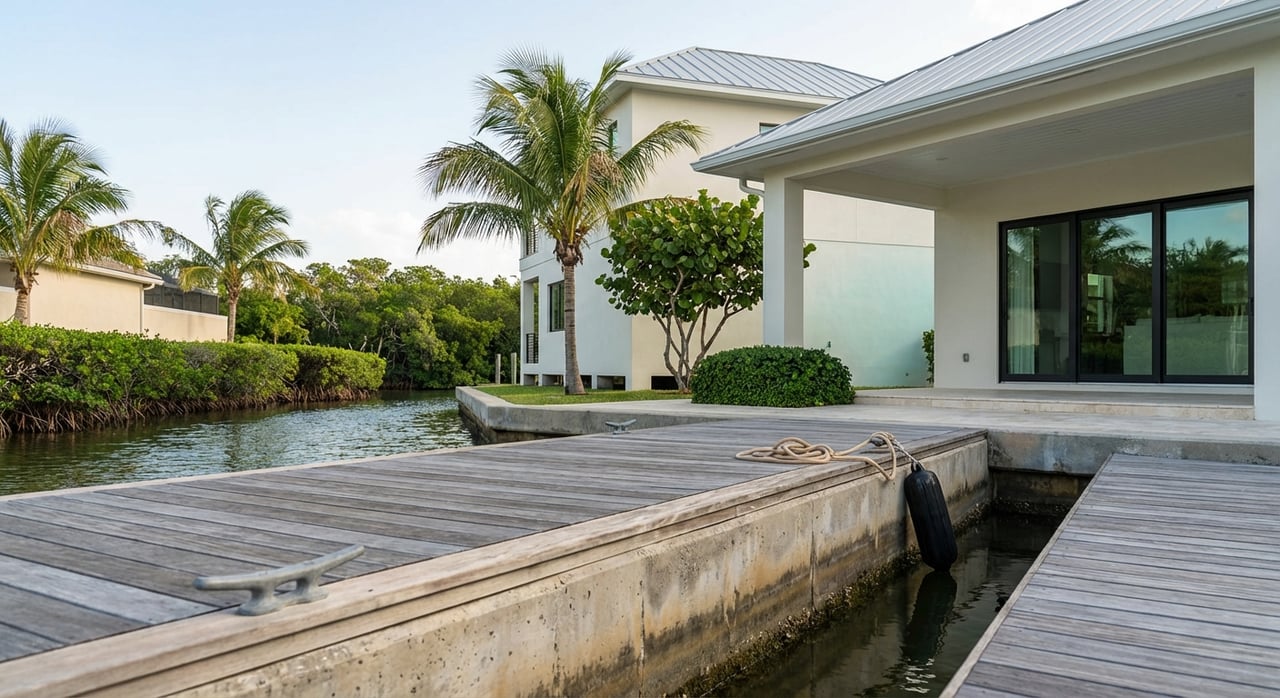
Picture your morning in Key Largo: the sun low over the water, a light breeze, and your boat waiting at the dock. The only question is where that dock sits. Do you want the protection and convenience of a canal, or the big-sky views and faster runs that come with open bayfront or oceanfront? You are not alone if you are torn between the two.
In this guide, you will compare the day-to-day experience of canal-front and bayfront homes in Key Largo. You will learn how to match your boat and lifestyle to the right shoreline, what risks and maintenance to expect, and what to verify before you make an offer. You will also see the local resources that help you plan with confidence. Let’s dive in.
Quick answer: canal vs bayfront
- Canal-front gives you sheltered docking, easier line handling, and a calm tie-up at day’s end. It often suits skiffs, flats boats, and family cruising. Depth and turn space can vary by canal, so boat size and draft matter.
- Bayfront or oceanfront gives you wider views and quicker, more direct runs to the reef and offshore grounds. Many open-water lots offer deeper water where natural channels exist. Exposure to wind and waves is higher, so structures and boats see greater loads in rough weather.
Both options can be excellent in Key Largo. The right choice depends on your boat, your daily routine, and how you value views, privacy, and exposure.
Boating access: match boat to water
If you love diving or fishing at the reef, you will appreciate how close Key Largo sits to protected waters and coral habitats in and around John Pennekamp Coral Reef State Park. That proximity shapes daily run times and boat choices.
Offshore boats 30 feet and up
- Prioritize bayfront, oceanfront, or proven deep-water canals.
- Look for documented depth at the dock, clear channel access, and a permit history that supports larger lifts and longer docks.
- Fewer turns and less shoaling usually mean easier departures with guests or crew.
Skiffs, flats boats and dayboats
- Canal-front can be ideal for shelter and convenience.
- Many canals offer easy line handling, less wind at the dock, and a quiet place to rinse down.
- Verify canal depth, turning basin, and any association rules that affect your boat’s length overall and draft.
Transit time and local marinas
- If your private dock cannot fit your dream boat, consider pairing a canal home with a slip at a nearby marina. The Key Largo directory of local marinas and services helps you compare slip lengths, pump-outs, and haul-outs.
Views, privacy and lifestyle
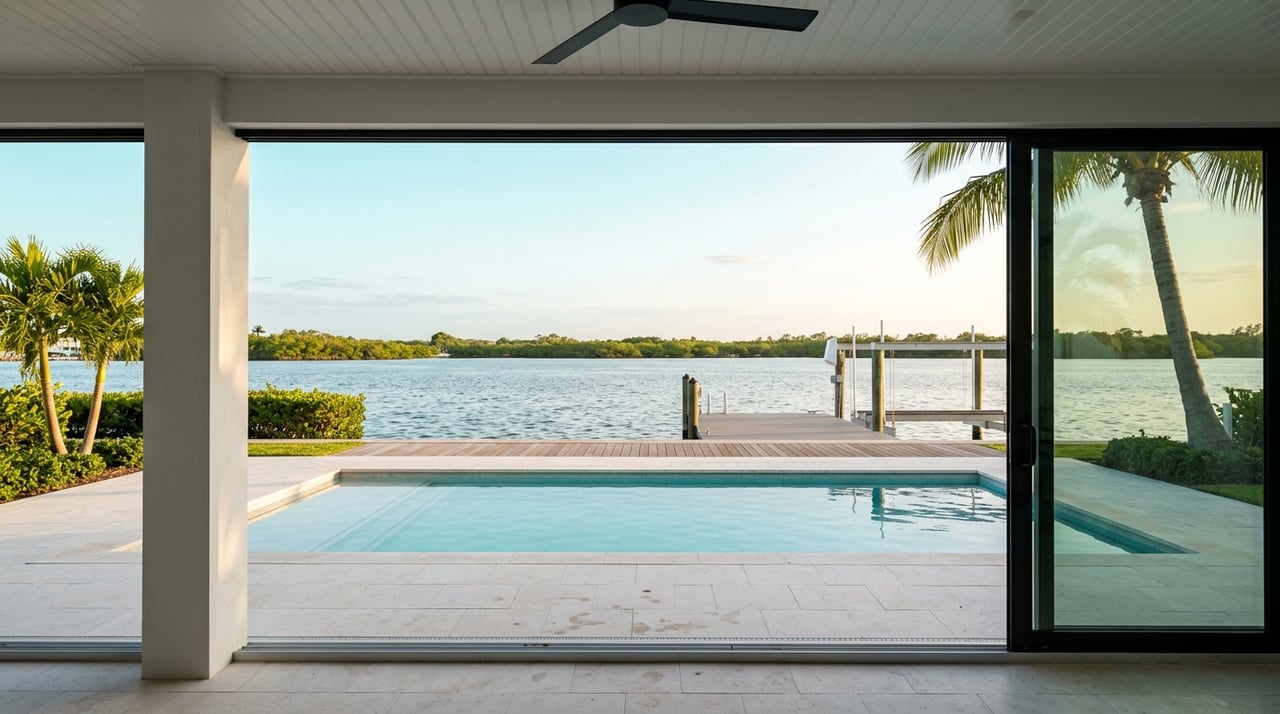
- Bayfront or oceanfront gives you unobstructed horizon views and dramatic sunrise or sunset exposure. If outdoor dining and wide-angle vistas matter most, open water is hard to beat.
- Canal-front offers a quieter, neighborhood feel. Some canals have mangrove or landscaped edges that feel private. Views may include neighbor docks and boats, so the visual experience is more intimate than panoramic.
Exposure, wind, waves and storm risk
Open water brings more wind, waves, and surge during storms. That extra energy loads seawalls, piers, and lifts, and can increase wear on boats and hardware. Canal properties are more sheltered under normal conditions, yet storm surge still matters across the Keys, which sit only a few feet above sea level.
- Use NOAA’s Sea Level Rise Viewer to visualize longer-term scenarios at a given shoreline.
- Confirm the property’s flood zone and base flood elevation on FEMA’s Flood Map Service Center. Elevation, construction type, and mitigation features can influence coverage and pricing.
Maintenance and permitting in Monroe County
Waterfront living includes regular upkeep. Plan for dock and lift service, seawall maintenance, corrosion control, and occasional repairs after heavy weather. In some locations, shoaling can require maintenance dredging, which adds complexity.
Permitting in the Keys involves several layers and more review than many mainland markets. Dock, seawall, and dredging projects often include state, federal, and sanctuary checks:
- Monroe County marine and building reviews coordinate with state and federal permits. The county’s pump-out and marina program shows how closely the county manages marine uses.
- Florida’s environmental resource permitting and dredge or fill rules are governed under Chapter 373, Florida Statutes.
- The Florida Keys National Marine Sanctuary reviews projects that could affect sanctuary resources. It also operates mooring buoys so boaters avoid reef anchoring. See the sanctuary mooring buoy program for maps and guidance.
- Handling multiple approvals can take months. For a sense of sequencing and timing, review permitting overviews like these marine permit insights.
Cost expectations to plan for
Every site is unique, but these broad ranges help you budget and compare options. Always confirm with current local quotes and engineering.
- Seawall or bulkhead replacement. U.S. cost guides often show hundreds to low thousands of dollars per linear foot depending on method, access, and elevation needs. Expect a significant capital project. See national ranges in this seawall cost guide.
- Dock and lift work. Pile-supported docks with utilities and large-capacity lifts can reach into six figures. Shorter or simpler docks cost less. Older docks with compromised piles or caps often need full replacement rather than repairs.
- Dredging. Feasibility and cost hinge on volume, habitat surveys, disposal, and mitigation. Work that touches seagrass or other benthic habitat triggers state and federal review under Chapter 373, which can extend timelines and add mitigation costs.
Build a contingency into your budget, and have a plan for permit sequencing if you intend to upgrade shoreline structures after closing.
What to get in writing before you buy
Ask your agent to help you gather and confirm these items early. They protect your boating use and your resale value.
- As-built permits and drawings for the dock, lift, and seawall. Collect county, state, and any federal approvals.
- Bathymetry at the dock terminus with tide datum, and the limiting depth from the property to open water. Confirm the maximum length overall and draft the setup can handle.
- Seawall age and condition report. Look for documentation on tie-backs, panels, and past repairs.
- Flood zone and elevation certificate for insurance underwriting. Pull a map and certificate from FEMA’s Flood Map Service Center.
- Dredging history and who is responsible for future maintenance. Note any HOA or shared-channel obligations.
- Sanctuary and no-anchor areas near the property. Review the FKNMS buoy and map resources.
- Marina access if a private dock will not fit your boat. The county’s pump-out program and marina rules matter for liveaboard and slip users.
- Preliminary home and flood insurance quotes. Florida’s insurance environment changes, and mitigation credits can affect pricing.
Sanctuary rules and responsible boating
The Florida Keys National Marine Sanctuary protects coral, seagrass, and wildlife. Anchoring on living coral is prohibited. Public mooring buoys are provided at many dive and snorkel sites so you can enjoy the reef without damaging it. Plan outings with the sanctuary’s mooring buoy maps and guidance, and brief guests on local rules.
Canal vs bayfront: a simple checklist
Use this quick filter when you compare addresses.
- Your boat. Deep-V offshore boat 30 feet or larger, or a center console with deeper draft, often favors bayfront or proven deep-water canals. Skiffs and flats boats often favor canals for shelter.
- Your run time. If you want the shortest path to the reef or blue water, open water lots usually reduce transit time.
- Your comfort at the dock. If you prefer calm tie-ups, easy boarding with guests, and less wind at the lines, canals are hard to beat.
- Your view priority. If sunrise, sunset, and horizon views define your day, bayfront or oceanfront delivers that experience.
- Your risk tolerance. Open water brings more wind and wave exposure. Canal homes are more sheltered in daily conditions, but surge risk still depends on site elevation and flood zone.
Where marinas fit your plan
Not every property will check every box for your boat. Pairing a home with a slip at a local marina can be a smart way to keep the lifestyle you want without overpaying for features you will not use every day. The Key Largo marina listings help you scan slip length limits, pump-outs, and nearby services.
Pricing reality and next steps
Public websites show that Key Largo values span from the mid six figures to multi-million dollar sales, with wide variation by location and features. There is no single published percentage that defines how much more bayfront trades for over canal-front in Key Largo. The premium depends on frontage, permitted dock length and depth, elevation, recent seawall or dock work, and the specific waterbody.
If you want a precise picture, ask for a sold-comp analysis from the last 12 to 24 months, filtered by frontage type, linear waterfront, permitted dock length and boat size, flood zone, and recent marine improvements. That approach normalizes the data and helps you see a true apples-to-apples comparison before you write an offer.
Ready to explore properties that fit your boat and lifestyle, with a clear due-diligence game plan? Connect with Pierre-Marc Bellion for boutique, multilingual guidance and global reach. Receive Exclusive Listings and move forward with confidence in the Upper Keys.
FAQs
What is a canal-front home in Key Largo?
- A property on a man-made or dredged canal or basin that connects to open water, often with sheltered docking and variable depth and turning space.
How does flood risk compare between canal and bayfront?
- Open water has more wave and wind exposure, but surge risk is site-specific; elevation and flood zone usually matter more than frontage type.
Can I dredge to make my canal deeper?
- Maybe, but it requires state and often federal review, habitat surveys, and permits; feasibility depends on seagrass and other environmental factors.
How long does it take to permit a new dock?
- Plan for several months for surveys and multi-agency reviews, with longer timelines for complex sites or sanctuary resource impacts.
Where can I check sea-level and flood maps?
- Use NOAA’s sea-level visualization tools and FEMA’s Flood Map Service Center to review scenarios and the property’s flood zone.
Are there rules about anchoring near the reef?
- Yes; anchoring on living coral is prohibited, and public mooring buoys are provided at many sites to protect reefs and simplify tie-ups.