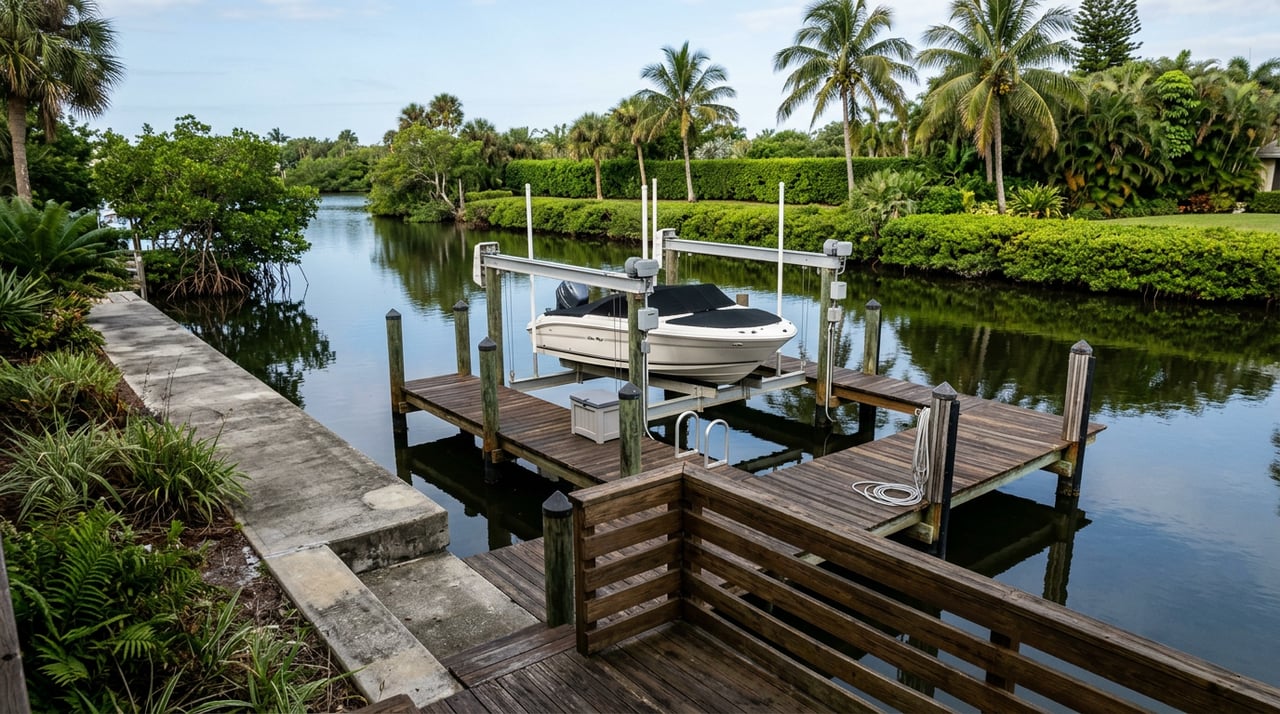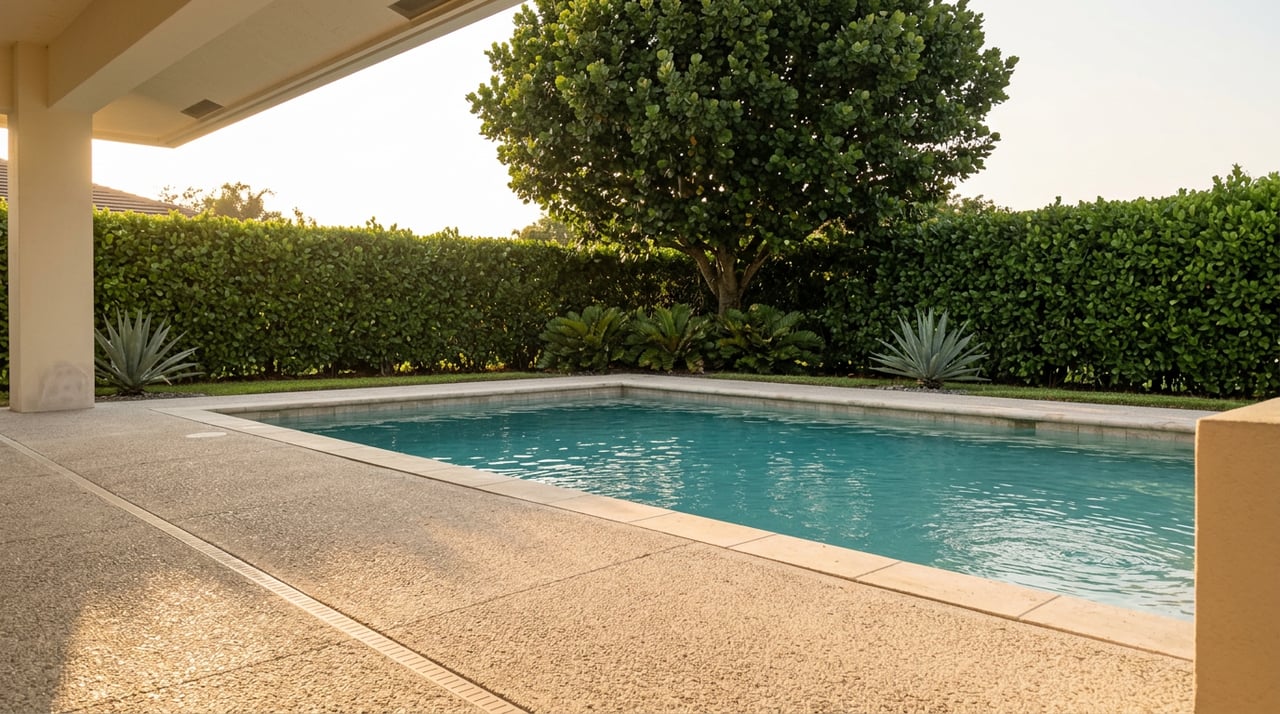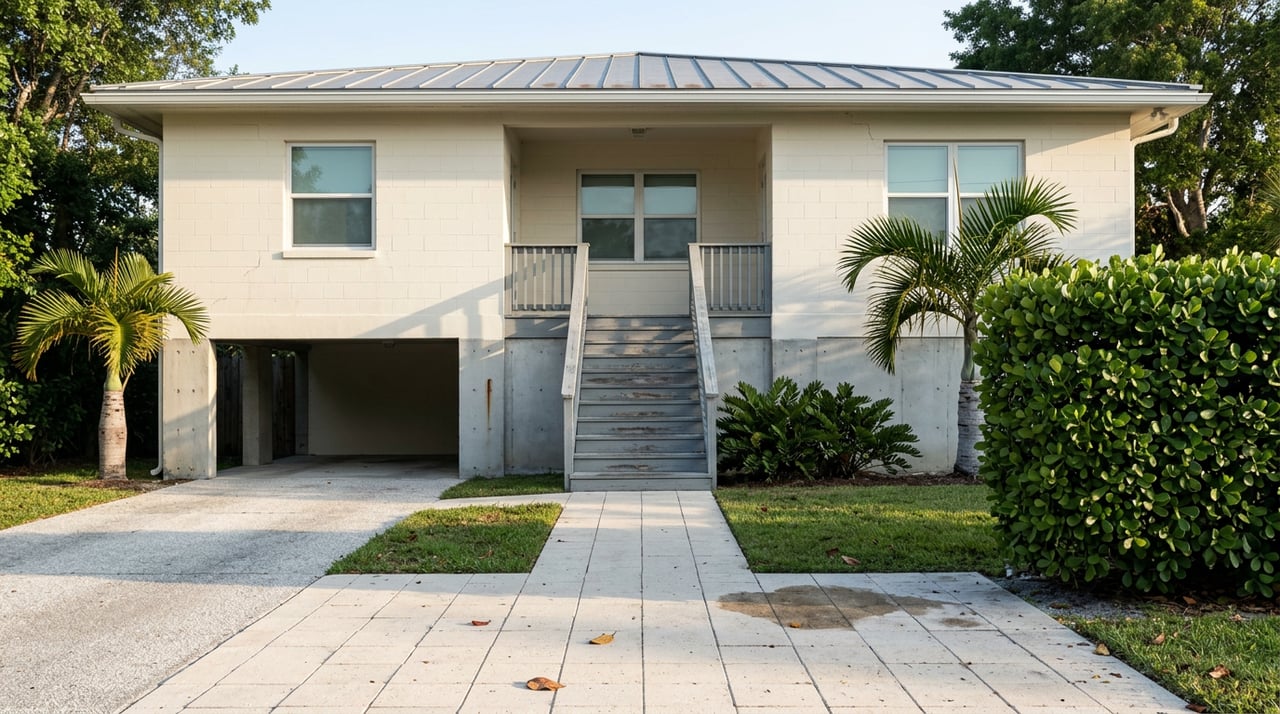
Picture two canal homes a buyer might cross off the same shortlist this fall. Both are three bedrooms, both sit on concrete seawall with a lift, both list within twenty thousand dollars of each other. One is in Key Largo. One is in Islamorada. The listing sheets look almost interchangeable. The tax lines will not.
That difference has nothing to do with square footage, dockage, or finish level. It comes down to a boundary that never shows up in a drone photo: whether the parcel sits inside an incorporated village or out in unincorporated Monroe County. This September, as Keys governments finalize their 2026-27 budgets, that boundary is doing more to separate one owner's bill from another's than almost anything else on the property record.
The Layer That Only Some Owners Pay
Monroe County is not one taxing authority. It is several, stacked on top of each other depending on where a parcel sits.
Every property in the county, incorporated or not, pays the county's aggregate millage. That rate funds sheriff's patrols, fire rescue in unincorporated areas, the property appraiser's office, and general county government. For fiscal year 2026-27, the county commission approved a preliminary aggregate millage of 3.4054, a 7.7% increase over the rolled-back rate of 3.1618. The first public hearing on that rate was held September 9 at the Nelson Government Center in Key Largo, with a final hearing set for September 14 in Key West.
Key Largo and Tavernier stop there. Both are unincorporated, which means residents pay the county rate and nothing more layered on top for municipal government. There is no village council setting a second millage, no separate village budget to fund.
Islamorada is different. It incorporated as the Village of Islands, which means it runs its own council, its own police contract with the sheriff's office, its own fire rescue budget, its own parks and public works departments, all funded by a municipal millage the village sets independently of the county. That's a second layer that unincorporated Key Largo and Tavernier residents simply don't carry.
This Year, the Layers Are Moving at Different Speeds
The gap between an incorporated tax bill and an unincorporated one isn't fixed. It gets renegotiated every September, by different elected bodies weighing different budgets, and this year the three cycles happening across the Upper Keys illustrate just how unrelated those decisions are to each other.
| Government | Structure | Preliminary FY2026-27 move |
|---|---|---|
| Monroe County (covers Key Largo, Tavernier) | Countywide aggregate, no village layer for unincorporated areas | 3.4054 mills, up 7.7% over rollback |
| Islamorada Village Council | Village millage added on top of county rate | Set at 2.8 mills in July (13% over rollback), trending toward roughly 2.7231 mills in later workshops |
| Marathon City Council | Separate incorporated city, added on top of county rate | Preliminary 2.3231 mills, an 18.8% increase, to raise about $12.2 million for the general fund |
Islamorada's council opened at a preliminary 2.8 mills on July 7, choosing that number over a staff-recommended 3 mills specifically to leave room to work the rate down before final adoption. In the budget workshops that followed, the village settled on a tentative $23.7 million day-to-day operating budget and a rate near 2.7231 mills. On an average Islamorada home valued at $1.2 million with the standard $50,000 homestead exemption, that pencils out to $3,251.80 in village property tax for the coming year, an increase of $87.27 over the prior cycle. Non-homesteaded owners, who make up the majority of Islamorada's tax roll, would see a slightly larger increase of $90.96.
One town over, Marathon's council approved a preliminary rate that represents a much sharper move, an 18.8% increase to 2.3231 mills. That's worth noting only because it shows incorporation itself doesn't set a fixed penalty. Two incorporated cities in the same county, in the same budget season, can move their added layer in very different directions depending on local spending priorities. Last year, Marathon's council actually pulled back to a rollback rate of 2.0631 mills after opening higher, and Islamorada has done the same in past cycles, adopting 2.65 mills in September 2025 after a preliminary rate of 3.000. Preliminary rates are ceilings under Florida law. Councils can lower them before final adoption, but they cannot raise them past what was advertised.
The practical takeaway for anyone comparing an Islamorada canal home to a Key Largo one: the county layer is set once, applies everywhere, and this year is up 7.7% on a preliminary basis. The village layer is a second decision, made by a different set of elected officials, and it can widen or narrow the gap from one September to the next. A buyer pricing out two nearly identical homes on either side of that line is really pricing out two governments' independent judgment calls, not one uniform system.
The Ballot Measure That Won't Fix This for Most Buyers
There's a second variable working its way through this year's budget conversations, and it's easy to mistake for something that will flatten these differences. It won't, at least not for the buyers this market mostly serves.
Florida's homestead exemption currently sits at $50,000 for qualifying owner-occupied properties. A proposed constitutional amendment on the November 2026 ballot would scale that exemption up to $150,000 for fiscal year 2027-28 and to $250,000 for fiscal year 2028-29, if voters approve it by the required 60% threshold on November 3. Homesteaded properties in Monroe County already carry a separate protection, the Save Our Homes cap, which limits annual increases in assessed value to 3% or the change in the Consumer Price Index, whichever is lower.
Here's the part that matters for the kind of buyer this market actually attracts. Of Monroe County's total taxable value for the 2026-27 fiscal year, only 19.64% comes from homesteaded properties. Non-homesteaded residential property, the second homes, investment properties, and vacation rentals that make up so much of the Upper Keys canal and waterfront inventory, accounts for 60.11% of the total taxable value. A ballot measure built around expanding the homestead exemption is aimed at owner-occupied primary residences. It does nothing for the majority of taxable value sitting in this county, and it does nothing at all for a buyer purchasing a second home or a rental property in Islamorada, Key Largo, or Tavernier who has no intention of homesteading it.
So the amendment is real, it's on the ballot this November, and it could meaningfully lower bills for year-round Keys residents starting in two fiscal years. But treating it as a reason to discount today's millage numbers when comparing an Islamorada purchase to a Key Largo one would be a mistake for most buyers in this price range.
What to Actually Check Before You Write an Offer
The county's own tax estimator tools and the property appraiser's records will show a specific parcel's current assessed value and applicable millage, and that's the only number worth trusting over a general market comparison. A few things worth confirming before an offer goes in.
Ask whether the parcel is inside Islamorada's village limits or in unincorporated Key Largo or Tavernier. That single fact determines whether a second layer of municipal millage applies at all.
Ask what the seller's current assessed value looks like versus market value. If the seller has held the property under homestead protection for years, the Save Our Homes cap may have kept their assessed value well below what the parcel would sell for. At closing, that protection resets. The new owner's assessed value moves to something closer to the purchase price, and the tax bill moves with it, regardless of whether the new owner homesteads or not.
Ask when TRIM notices went out for that property and whether an appeal was ever filed. Monroe County's assessment notices typically arrive by mid-August each year, and property owners have a limited window to contest an assessed value they believe is too high.
None of this is tax advice, and every number here should be confirmed against the parcel's actual record before it factors into an offer. But knowing which questions to ask, and knowing that two similar-looking canal homes can sit on two entirely different tax structures, is the kind of groundwork that belongs in a comparison before the number ever gets to a closing statement.
A Few Questions Worth Asking Directly
Does living in unincorporated Key Largo or Tavernier mean no local government fees at all? It means no separate village or city millage. Certain subdivisions may still carry municipal service benefit units or special assessments for things like solid waste or specific infrastructure, so a parcel's full non-ad valorem line items are still worth reviewing individually.
If Islamorada's preliminary rate looks high in July, does that mean the final bill will be that high too? Not necessarily. Florida law sets preliminary rates as a ceiling, and Islamorada's council has lowered its rate between preliminary and final adoption in recent cycles, including moving from 3.000 to 2.65 mills in the 2025-26 cycle.
Should I wait until after the November ballot measure to buy, in case my tax bill drops? For a homesteaded primary residence, any benefit from an expanded exemption wouldn't begin until fiscal year 2027-28 at the earliest, and it requires 60% voter approval this November. For a second home or investment property that won't be homesteaded, the measure has no direct effect regardless of timing.
If you're weighing a canal home in Islamorada against one in Key Largo or Tavernier and want to understand what a specific parcel's tax history actually looks like before you write an offer, Pierre-Marc Bellion has spent years working both sides of these village lines and can walk through the numbers with you, in English, French, or Spanish, before you fall for a listing photo instead of a ledger.