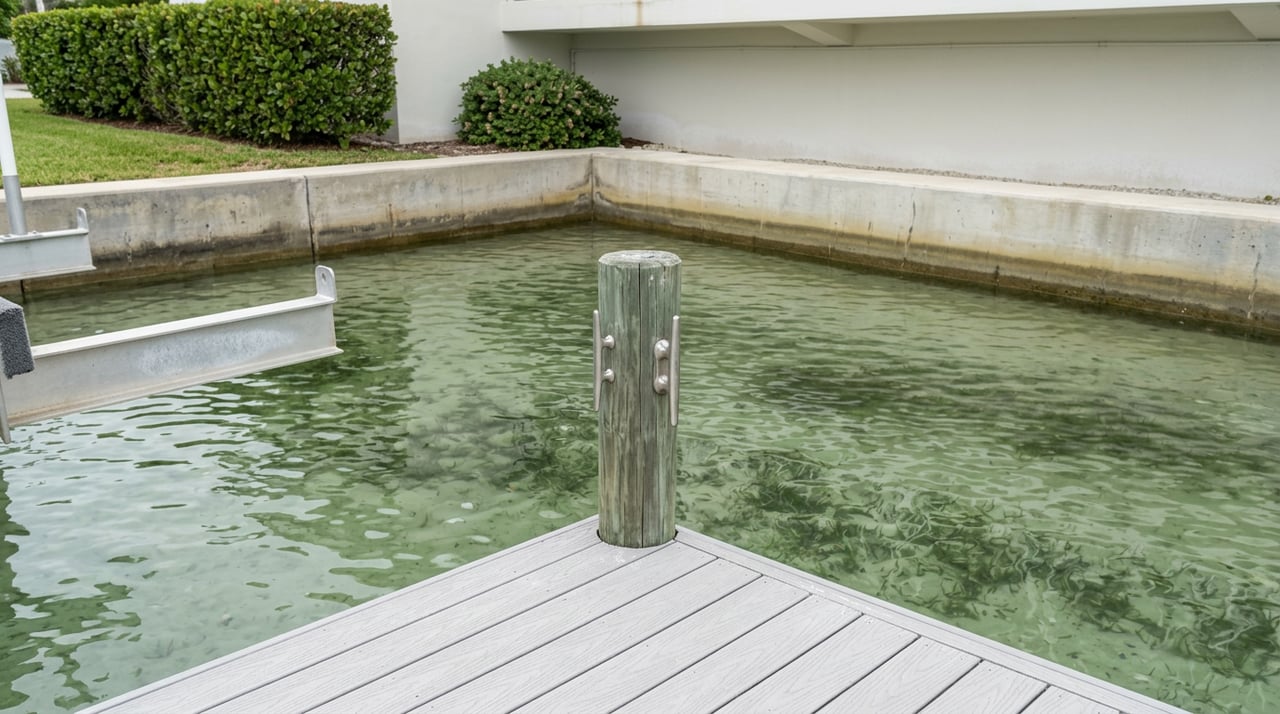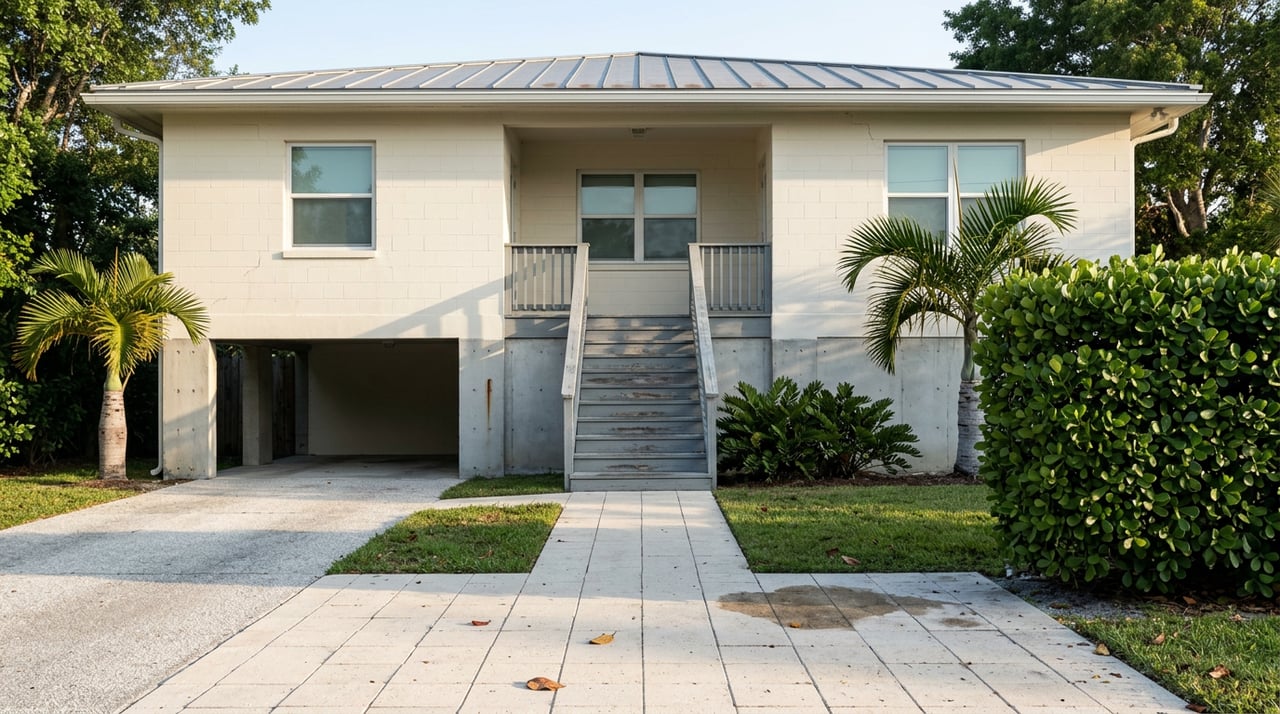
A buyer walks two properties on the same street in Tavernier. One is a vacant canal lot, cleared, seawall in good shape, ready for a builder's imagination. The other is a low, dated 1970s concrete block cottage two lots down, same canal, same access to Florida Bay. On paper the lot looks like the better deal. It's a blank canvas. No outdated kitchen to gut, no old roof to replace, no reason to compromise on the design.
Then the buyer's agent explains why the cottage is priced within a hundred thousand dollars of the empty lot, and why it might sell faster.
The lot doesn't come with a guarantee that anyone can build on it. The cottage does, because it already has one.
The Permit Is the Product
Tavernier sits in unincorporated Monroe County, which means new residential construction here runs through the county's Rate of Growth Ordinance, known locally as ROGO. The ordinance exists because the Florida Keys have exactly one road out, and the state requires the county to be able to clear its population in a set window before a hurricane. Monroe County's own description of the program calls it a competitive point system: applicants are scored, ranked, and awarded a limited number of building permits each quarter, guided toward parcels with infrastructure and away from environmentally sensitive land. You can read the full mechanics in Chapter 138 of the county's land development code, but the short version matters more for a buyer: owning a vacant lot in Tavernier does not automatically mean you can build on it. You apply. You wait. You compete against everyone else who applied that quarter.
The county's own ROGO program page frames the goal plainly: measured growth that the county's roads can still evacuate safely. That framing is not marketing language. It is the reason the queue exists at all, and the reason it moves slowly.
How slowly is the part most out-of-market buyers underestimate. As of early 2025, unincorporated Monroe County had roughly 150 market-rate residential allocations left to distribute before the program's scheduled 2026 wind-down, with another 144 held in reserve strictly for legal relief cases tied to takings claims. Split across the Upper Keys, Lower Keys, and Big Pine Key/No Name Key subareas and issued in small quarterly batches, that number moves fast in one direction only: down. The Monroe County Planning Commission's August 27, 2025 meeting minutes show the shape of a typical quarter: Upper Keys applicants ranked 1 through 8 were recommended for that period's allocation awards, with everyone else rolling over to compete again. You can see that ranking process documented directly in the commission's own meeting minutes.
Three Ways In, and They Are Not Equal
For a buyer deciding how to get a home built or renovated in Tavernier, there are really three paths, and they carry very different timelines.
| Path | What you're buying | The catch |
|---|---|---|
| Vacant lot, no allocation | Land only | You enter the ROGO queue and compete on points. No fixed wait time. |
| Property with an existing legal dwelling | Land plus a built-in permit | Tear down and rebuild using that unit's existing rights. No queue. |
| Already-built home | A finished structure | Skip the permitting question entirely, at the cost of built-in design choices |
That middle row is the one that changes the math on a Tavernier purchase most buyers never see coming. A property with a lawfully established dwelling on it carries what the county treats as an existing allocation. Tear the structure down, redesign, and rebuild, and you are working with a unit that already cleared the growth-rate hurdle years or decades ago. You never touch the queue. That is why a modest, dated cottage on a good canal lot can command real money even when the buyer's actual plan is to demolish it. The buyer is not paying for the cottage. They are paying for what the cottage already proved: that this parcel has a right to hold a home.
One Town Over, a Different Rulebook
Buyers cross-shopping Tavernier against Islamorada often assume the rules are the same because the towns sit five minutes apart on the same highway. They are not. Islamorada incorporated as its own village and runs a separate system called the Building Permit Allocation System, or BPAS, which the village describes as its own version of the county's ROGO, complete with its own point scoring and its own quarterly rankings, viewable on Islamorada's official BPAS page. That pool of permits is entirely separate from the county's, scored on its own criteria and tracked on its own quarterly schedule. Tavernier, sitting in unincorporated county territory, draws from the county's ROGO pool instead, a different queue with its own separate count of remaining allocations.
That distinction is not trivia. It means a vacant lot in Islamorada and a vacant lot in Tavernier, even if they look identical on a map, sit inside two different permitting universes with two different levels of buildability risk.
What the Mechanism Does to Tavernier Pricing
Once you see the queue, Tavernier's pricing pattern reads differently. As of May 2026, the average Tavernier home value stood at $750,834, up only 0.4 percent over the prior year, a pace that looks almost flat next to the headlines about Keys real estate. In the same month, the median list price across Tavernier sat at $885,000, or about $797 per square foot, with homes spending a median of 81 days on market, down 8 percent from May 2025. Canal-front and bayfront properties specifically have been running in the $1.0 to $1.1 million range.
Flat appreciation and a still-tight per-square-foot number are not a contradiction. They are what you would expect in a market where new supply is not rationed by builder capacity or buyer demand, but by a fixed number of state-mandated permits. Prices do not need to spike every year to stay structurally supported when the alternative to buying an existing dwelling right is joining a queue with no promised end date. The scarcity is already priced in. It shows up as durability rather than as a sharp curve upward.
The open question worth watching is on the regulatory side. In December 2024, Monroe County asked the state to extend its hurricane evacuation clearance standard from 24 hours to 26, a change that could eventually unlock roughly 3,550 additional residential permits countywide, the large majority earmarked for workforce housing. As of late 2025, that request remained unapproved by FloridaCommerce. If it is ever approved, the calculus between a vacant lot and an already-built home in Tavernier shifts, because the queue would suddenly have more room in it. Until then, existing dwelling rights keep their premium.
What This Means If You're Comparing Two Listings
If you are looking at a small or dated home in Tavernier and comparing it to a similarly priced vacant lot, the question to ask your agent is not just what the house looks like inside. It is whether the home carries a lawfully established dwelling unit, when it was last permitted, and whether a rebuild would use that existing allocation or trigger a new ROGO application. That single answer can be worth more to your timeline than square footage, finishes, or even the view.
A Few Questions Worth Asking Before You Write an Offer
Does ROGO apply to condos, or only single-family homes? The residential allocation system covers dwelling units broadly, which the county's code defines to include hotel and motel rooms, mobile homes, and institutional residential units, not just detached houses. Multi-family and condo development in Tavernier moves through the same permit-limited framework.
What happens if I buy a vacant lot with no existing dwelling? You apply for a ROGO allocation and your application is scored against everyone else's in that subarea for that quarter. There is no guaranteed timeline. Some applicants accumulate points over multiple years before an allocation comes through.
Can a dwelling right be lost if the home is torn down first? This is exactly why the sequence matters and why it's worth confirming with the county before closing. A property's existing rights are tied to what the county has on record as lawfully established. Any buyer planning a teardown in Tavernier should verify the dwelling's status with Monroe County's planning department before assuming the existing right transfers automatically.
Tavernier rewards buyers who understand what they're actually purchasing, and that's rarely just the structure standing on the lot. If you're weighing a canal home here against options in Key Largo or Islamorada and want someone who can walk you through what a specific parcel's building rights actually look like, reach out to Pierre-Marc Bellion and receive exclusive listings before they hit the wider market.