What if your Key Largo home put you on the water in minutes, with the right slip, lift, and route for your boat? If you are boat-first in your search, the right neighborhood and marina make all the difference. This guide helps you compare access on the ocean and bay sides, understand canal layouts and depths, and zero in on the facilities that match how you boat. You will also get a due-diligence checklist to keep surprises out of your purchase. Let’s dive in.
How Key Largo’s waters shape your boating
Key Largo stretches along two very different playgrounds: the Atlantic and Hawk Channel to the east, and Florida Bay with Largo Sound and Blackwater Sound to the west. Local cut-throughs like Adams Cut connect the two sides, and short residential canals feed into larger channels. You can see the layout clearly on the Florida Keys boating guides published for the area, including the Carysfort section near northern Key Largo. These maps help you visualize reef lines, channels, and nearshore features before you choose a location.
- Review the local marine layout on the official Keys boating guide map for the Carysfort area of Key Largo: Carysfort detailed map.
- Tides are moderate but matter. The NOAA station at Ocean Reef Harbor shows a mean tidal range of about 2.3 feet, which means canal approaches and skinny cuts can be sensitive at lower tides. Check predictions before you plan a transit at low water using the NOAA Ocean Reef Harbor tide datums.
- Offshore, you will use sanctuary resources. The Florida Keys National Marine Sanctuary runs a large mooring-buoy network to protect coral at popular reef sites. Use these buoys instead of dropping anchor on coral and be aware of no-anchor zones and sanctuary preservation areas. Learn more on the FKNMS mooring buoy page.
Many marinas near central Key Largo advertise short run times to Hawk Channel. Use those numbers as a helpful benchmark, then confirm with local charts and a test run for your specific draft and tide.
Marinas you will actually use
Every boater’s routine is different. If you want resort convenience, go one way. If you want a yard with a heavy travel lift and quick fuel, go another. Below are Key Largo options that buyers often rely on. Always call ahead to confirm slip availability, max LOA, and seasonal policies.
Marina Del Mar Resort & Marina
If you want a deep-water resort marina in the heart of Key Largo with transient options, this is a popular pick. Materials for the marina reference roughly 70 to 80 slips with vessels advertised up to about 60 feet, and the on-site hotel amenities keep the crew comfortable between runs. See details on the Marina Del Mar resort marina page.
Key Largo Harbor Marina
A full-service commercial facility set on the Lake Largo basin with on-site fuel, repair, and a boatyard. Many owners choose it for quick access to the ocean and a complete service menu in one stop. Learn more at Key Largo Harbor Marina.
Garden Cove Marina
Oceanside and tucked into a sheltered canal, Garden Cove offers wet and dry storage, fuel, and a popular waterfront restaurant that makes provisioning and crew logistics simple. It is known for direct access to Hawk Channel and short runs offshore.
Pilot House, Key Largo Fisheries, and rack-storage options
Downtown’s Pilot House basin, the long-established Key Largo Fisheries Marina, and bayside rack-storage facilities such as the Marina Club at Blackwater Sound round out practical choices for smaller center consoles, skiffs, and day boats. These are great reference points when you want fuel, a ship store, or push-button rack service for quick launches.
John Pennekamp Coral Reef State Park
Pennekamp is a hub for ocean access with a deep-water public ramp, dinghy dockage, and managed mooring buoys in Largo Sound. The park’s rules and services are especially relevant if you plan day trips to the reef. Get current details on the John Pennekamp Coral Reef State Park experiences and amenities page.
Public boat ramps
If you trailer, Monroe County publishes the official list of public ramps across the Keys. For Key Largo, the county page includes Mike Forster Memorial Park and notes that there are eight public ramps countywide for orientation. See the Monroe County boat ramps list.
Pump-out and environmental services
Pump-out access is more than a convenience. Monroe County encourages and, for certain facilities, requires fixed pump-out systems. The county also runs a marina pump-out outfitting program that supports environmental compliance. If you plan frequent use or host guests, verify that your chosen marina has reliable pump-out on site. Read about the Monroe County Marina Pump-Out Program.
Neighborhood and dockage types
Key Largo waterfront comes in a few common profiles. Understanding how each one boats is the key to loving your routine after close.
Oceanside homes and marinas
- What you gain: the shortest runs to Hawk Channel and quick access to reef diving and offshore fishing. Oceanside marinas like Garden Cove and Marina Del Mar are examples of direct ocean access locations.
- What to check: exposure to swell during fronts and storm season, plus stricter environmental review for new or expanded dock work. Sanctuary protections and state permitting can add steps to oceanfront dock projects.
Bayside, Largo Sound, and Blackwater Sound
- What you gain: typically calmer waters for cruising and flats fishing with sunset views and protected anchorages. Many bayside communities and condo-marina setups lean toward smaller center consoles and skiffs that excel in shallow water.
- What to check: approach depths are often shallower and more sensitive to tides. Seagrass protections may limit where you can anchor. Use mooring fields or sandy areas where permitted.
Canal-front homes
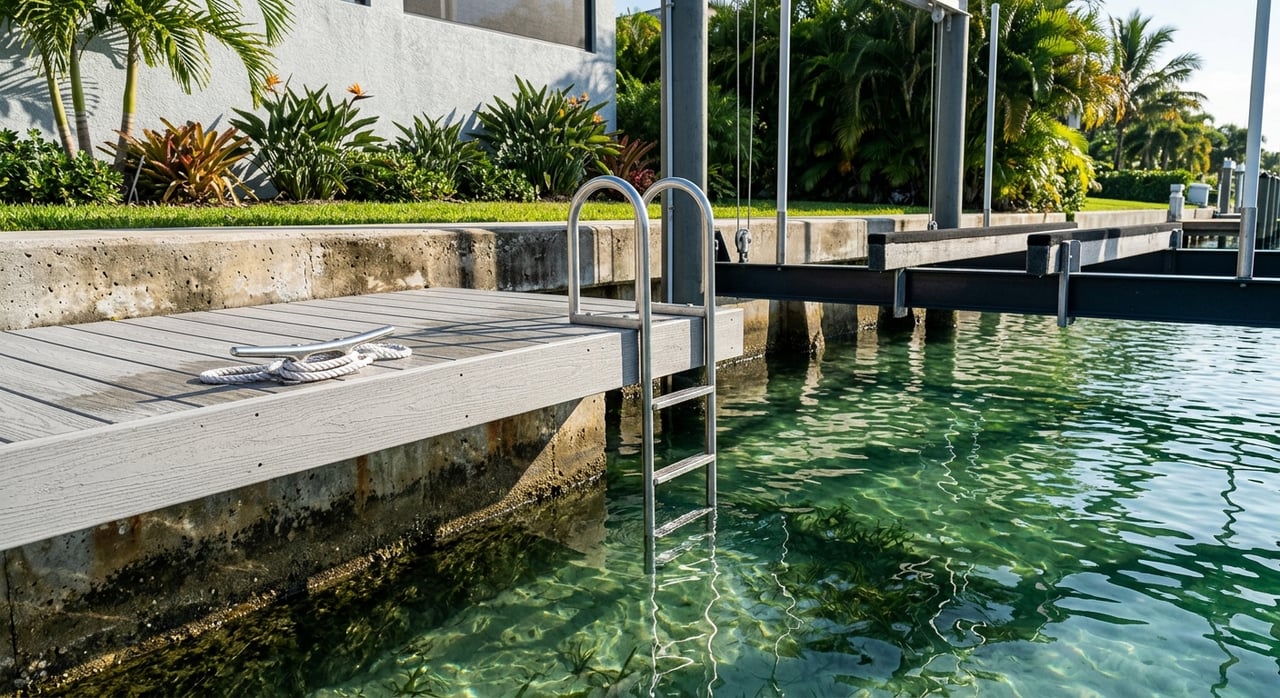
- What you gain: keep your boat steps from your kitchen. Many canal-front properties have private docks, davits, or lifts with short runs to a main channel or sound.
- What to check: controlling depth at mean low water and the width of your canal. Maximum allowed vessel size is property-specific. Always verify recorded permits and any past dock or seawall approvals for the parcel using the county’s posted records of completed permits.
Marina-condo and rack storage
- What you gain: low-hassle ownership if you prefer valet launches or indoor protection. Many rack-storage or marina-condo models are designed around skiffs and center consoles.
- What to check: association rules, assigned rack sizes, lift capacities, and any restrictions on overnighting or liveaboard use.
Permits, rules, and operations to confirm
Waterfront improvements and boat living come with extra homework in the Keys. Before you buy, build these checks into your plan:
- Multi-agency approvals: new docks, expansions, or work on submerged lands often require Monroe County permits and state authorizations. Projects that involve dredging or filling can trigger state and federal review. Plan for timelines and expert help if you expect to modify a dock.
- County permits and compliance: search for dock, seawall, and lift permits tied to the parcel. Confirm that past work was inspected and closed without violations using Monroe County’s completed permits records.
- Mooring and anchoring: use sanctuary mooring buoys at reef sites and follow John Pennekamp State Park rules inside the park boundaries. Anchoring on coral is prohibited in preservation areas.
- Pump-outs and marina services: if you intend to host guests or use your boat frequently, prioritize marinas with on-site fuel and fixed pump-outs. Monroe County’s program outlines expectations for larger facilities.
- Liveaboard and overnight policies: these vary by marina and HOA. Read the marina terms and association documents and confirm county rules before planning to live aboard or stay onboard for extended periods.
- Tides and transit: use the NOAA Ocean Reef Harbor station to plan your margin at low water. A short canal can become very short on a spring low.
How to choose your best-fit area
Start with how you boat today and how you want to boat a year from now. Then match that to access and facilities.
- Offshore angler or diver: lean oceanside or anywhere with a short, reliable route to Hawk Channel and the reef. A slip in or near central Key Largo with quick ocean access simplifies early starts.
- Flats and backcountry explorer: bayside homes or rack storage near Blackwater Sound can shorten your run to the shallows. Confirm approach depths and your draft at low tide.
- Canal-front convenience: pick a canal width and controlling depth that fit your current vessel. Build in a future margin if you might size up. Verify lift capacity and recorded permits.
- Trailer boater: keep options open with a home base near the county ramp and a marina with fuel and supplies along your route. Use the official ramp list to plan launch points.
- Larger yacht owner: look for deeper basins, wider turning areas, and marinas that can handle your LOA plus service needs. A travel lift, skilled yard, and reliable pump-out are practical must-haves.
A quick due-diligence checklist for buyers
Use this punch list to keep your search efficient and on track:
- Verify controlling depth: confirm depths at mean low water using local soundings and the NOAA Ocean Reef Harbor datums. Plan an under-keel margin.
- Pull recorded permits: request dock, seawall, and lift permits from the seller and cross-check the county’s completed permits.
- Confirm slip or lift rights: determine if the dock or rack is deeded, assigned by HOA, or rented from a marina. Review association rules and any liveaboard limits.
- Check fuel and pump-out: verify your preferred marina has reliable on-site fuel and a fixed pump-out that aligns with the county’s pump-out program.
- Study routes: on a calm day, run your path from dock to ocean or bay with the boat loaded as usual. Note bridge clearances, turn radii, and real-world transit time.
- Hurricane and storage plans: confirm haul-out options, dry-rack protocols, and your insurance coverage requirements. These details affect both safety and carrying costs.
- Sanctuary and park rules: plan your reef days around the FKNMS mooring buoys and follow John Pennekamp’s posted rules for mooring and overnighting inside the park.
Ready to shortlist neighborhoods that match your boat and your lifestyle rhythm? As a Keys-based advisor and waterman, I help you weigh access, depth, and dock realities alongside the home itself. For a tailored plan and private listings, connect with Pierre-Marc Bellion.
FAQs
Where can you launch a trailer boat in Key Largo?
- Monroe County maintains the official list of public ramps, including Mike Forster Memorial Park in Key Largo, on the county’s boat ramps page.
Can you anchor overnight on the reef or off an oceanfront home in Key Largo?
- No, anchoring on coral and in sanctuary preservation areas is prohibited; use sanctuary mooring buoys where provided and follow John Pennekamp State Park’s posted rules.
Will a 40-foot center console fit from a typical Key Largo canal to the ocean?
- It depends on the canal’s controlling depth and width; verify depths at mean low water, check recorded dock permits, and consult a local marina or yard before committing.
What marina amenities matter most if you use your boat often in Key Largo?
- On-site fuel, fixed pump-out, a capable travel lift or haul-out, secure storage, and a reliable service yard will make frequent use easier and protect your vessel.
How do tides affect canal navigation in Key Largo?
- The local tidal range is modest but meaningful; shallow approaches can tighten at low water, so plan routes and timing using the nearest NOAA tide station data.