If you are shopping for a waterfront home in Key Largo, the dock can be the feature that excites you most and the detail that changes everything. A beautiful canal-front property may look perfect in photos, but if your boat cannot float at low tide, turn comfortably in the canal, or reach open water under local boating rules, that dock may not work the way you expect. This guide will help you understand how dockage and draft work together in Key Largo so you can evaluate waterfront homes with more confidence. Let’s dive in.
Why Dockage Means More Than a Dock
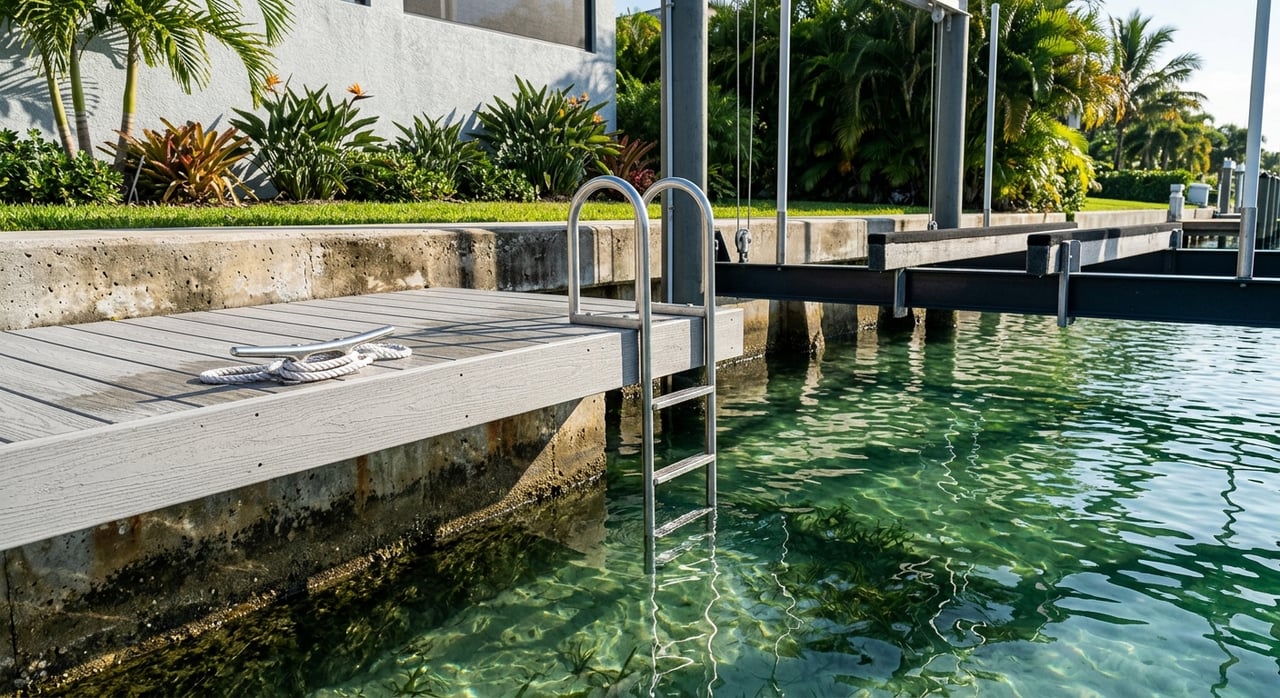
In Key Largo, dockage is not just about having a seawall and a place to tie up. It is the usable mix of dock length, lift or slip setup, water depth, and the route from the property to open water.
That distinction matters because two homes can both be labeled “waterfront” or “boat access,” yet offer very different real-world boating experiences. For buyers who plan to keep a boat at home, the question is not just whether a dock exists. It is whether the property fits your boat and how you actually use it.
What Draft Means for Waterfront Buyers
Draft is the vertical distance from the waterline to the deepest fixed part of your boat. In simple terms, it tells you the minimum water depth needed for your vessel to float without touching bottom.
When you evaluate a Key Largo waterfront home, your boat’s loaded draft is the number that really counts. That includes the deepest fixed points such as engines, props, rudders, skegs, and the normal gear you carry on board.
If the water at the dock or along the route out is too shallow for your draft, the dock may be far less useful than it first appears. That is why draft should be part of your home search from the start, not something you check after you fall in love with a property.
Why Tides Matter in Key Largo
A dock that works at one time of day may be more limited a few hours later. NOAA data from the nearby Ocean Reef Harbor station in Key Largo lists a mean tidal range of 2.3 feet, with mean high water at 2.51 feet above MLLW and mean low water at 0.21 feet above MLLW.
That is a meaningful swing for boat owners, especially in shallow canals and near-sensitive flats. NOAA’s Florida Keys marine conditions guidance also warns boaters to use extra caution at low tide.
For you as a buyer, the takeaway is simple: depth should be considered with tide in mind. A property that seems navigable at higher water may be much tighter at low water, and station data are only a nearby benchmark, not a substitute for property-specific depth information.
Why Canal Route Matters as Much as Dock Depth
Even if the dock itself has enough depth, the route from the home to open water can still be the deciding factor. In the Keys, your path out may include narrow canal sections, turns, shallow spots, and regulated boating zones.
Monroe County maintains more than 300 channel markers and 251 regulatory markers throughout the Florida Keys. These help guide boaters and protect shallow-water resources, and some zones include idle-speed/no-wake or no-motor restrictions.
That means usable dockage is partly a navigation question. You are not only buying the edge of the lot. You are also buying the practicality of getting from that lot to the water you want to enjoy.
Why Key Largo Buyers Should Respect Shallow Areas
The Florida Keys National Marine Sanctuary includes coral reef, seagrass, mangrove-fringed shoreline, hard-bottom habitat, sand flats, and mud flats. These shallow-water environments are a major part of what makes the Keys special, and they are also part of why boating conditions here require attention.
NOAA and Monroe County materials both emphasize the risk of damage from careless boating or propeller contact in shallow water. For buyers, that reinforces an important point: route depth and boating restrictions are not technical side notes. They are part of daily usability and responsible ownership.
How Dock Size and Layout Are Regulated
In Key Largo, dock usability is also shaped by local rules, not just by the shoreline. Monroe County’s docking rules state that docks may not exceed 10 percent of the width of the waterbody.
The county also says that a dock together with a moored vessel and or lift structure may not preempt more than 25 percent of the navigable portion of a waterbody. Dock location, lift type, and side setbacks are tied to the parcel and waterway.
For you, this means a lot’s geometry and canal width can affect what kind of dock setup is possible. A property may have waterfront appeal, but future dock changes or expansions may be more limited than expected.
Why Permits Matter Before You Buy
If a dock is existing, modified, or planned for future improvement, permits matter. Monroe County requires all needed permits from the Florida Department of Environmental Protection and the U.S. Army Corps of Engineers before dock construction.
Florida DEP notes that some single-family dock projects may qualify for self-certification, including a new dock with or without a boat lift, repair or replacement of an existing dock, or the addition of a boat lift. At the same time, submerged lands waterward of the ordinary or mean high water line may involve added state authorization.
In the Keys, canal or channel work can involve even more review. Monroe County states that removal of a canal barrier or plug may require an Environmental Resource Permit, proof of ownership or authority over submerged lands, water-quality protections, and sometimes sanctuary review.
Why Canal Depth Should Be Verified
One of the biggest mistakes a buyer can make is assuming canal depth from marketing photos alone. Monroe County publishes canal-restoration materials that allow users to look up canal name, depth, ranking, and related information.
That makes canal depth a fact to verify, not a guess. In a market like Key Largo, where tide, draft, and route conditions all interact, local depth data and site-specific measurements are far more useful than visual impressions.
A Practical Way to Evaluate Dockage
When you look at a Key Largo waterfront home, think about dockage as an operational system. The property has to match your boat, your boating habits, the local tide range, the canal conditions, and any permit constraints.
A dock that checks all those boxes can expand how useful the home feels from day one. It can also make the property easier to compare if boating access is a top priority in your search.
Key Questions to Ask About Key Largo Dockage
Bring these questions with you when you tour waterfront and canal-front homes in Key Largo:
- What is the measured depth at the dock end?
- What is the depth along the route to open water at the relevant low-water datum?
- What is your boat’s loaded draft, including fixed underwater components and normal gear?
- Does the canal route include marked channels, idle-speed/no-wake zones, or no-motor areas?
- Does the existing dock or lift appear to fit county width, setback, and navigable-portion limits?
- Is there county canal depth information, a recent survey, or other hydrographic data for this canal?
- Are there sensitive habitats nearby that could affect use or future dock changes?
- If you want to modify the dock later, would the work likely need additional county, state, federal, or sanctuary review?
- Would any future work involve dredging or filling?
What This Means for Your Home Search
In Key Largo, waterfront value is not only about views and frontage. For many buyers, especially those who plan to keep a boat at home, real value comes from usable access.
That is why dockage deserves the same level of attention as the house itself. When depth, draft, route, and permitting all align, a waterfront property becomes more than attractive. It becomes practical for the lifestyle you want to live in the Upper Keys.
If you are comparing canal homes or waterfront properties in Key Largo, working with someone who understands how boating access shapes day-to-day ownership can make your search much more focused. For tailored guidance on waterfront homes and canal properties in the Upper Keys, connect with Pierre-Marc Bellion.
FAQs
What does dockage mean for a Key Largo waterfront home?
- Dockage refers to the usable combination of dock length, lift or slip setup, water depth, and the route from the property to open water.
What does boat draft mean when buying a Key Largo canal home?
- Draft is the distance from the waterline to the deepest fixed part of the boat, and it determines the minimum depth needed to float safely.
Why does low tide matter for Key Largo dock access?
- NOAA data for nearby Ocean Reef Harbor shows a mean tidal range of 2.3 feet, so a property that works at higher water may be more limited at low tide.
Why should Key Largo buyers check canal depth before making an offer?
- Canal depth should be verified because listing photos do not show whether the water is deep enough for your boat at the dock or along the route out.
Are docks regulated in Monroe County?
- Yes. Monroe County regulates dock width, navigable-water preemption, setbacks, and related dock placement standards.
Can you change or expand a dock later in Key Largo?
- Possibly, but future changes may require county, state, and other approvals depending on the scope of work and the site conditions.
Why do boating zones matter when buying a Key Largo waterfront home?
- Channel markers and regulatory zones can affect how easily and how quickly you can travel from the dock to open water.
What should you bring when touring Key Largo waterfront homes with dockage?
- You should know your boat’s loaded draft and ask for measured depth, canal information, and any available records related to the dock and route to open water.